From comprehensive eye exams to specialist consultations, my clinic aims to support you fully.
Your journey to clear and comfortable vision starts here.
About
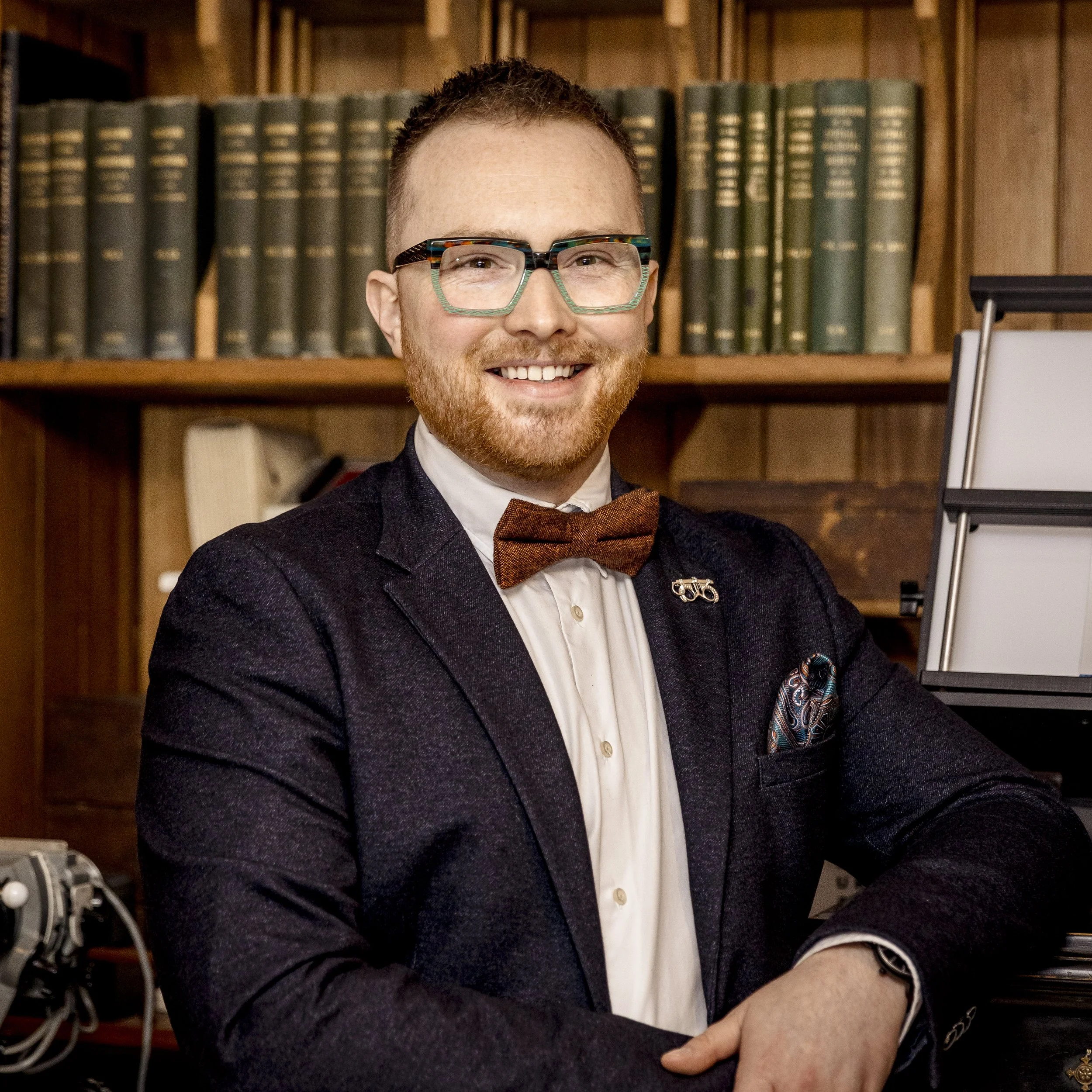
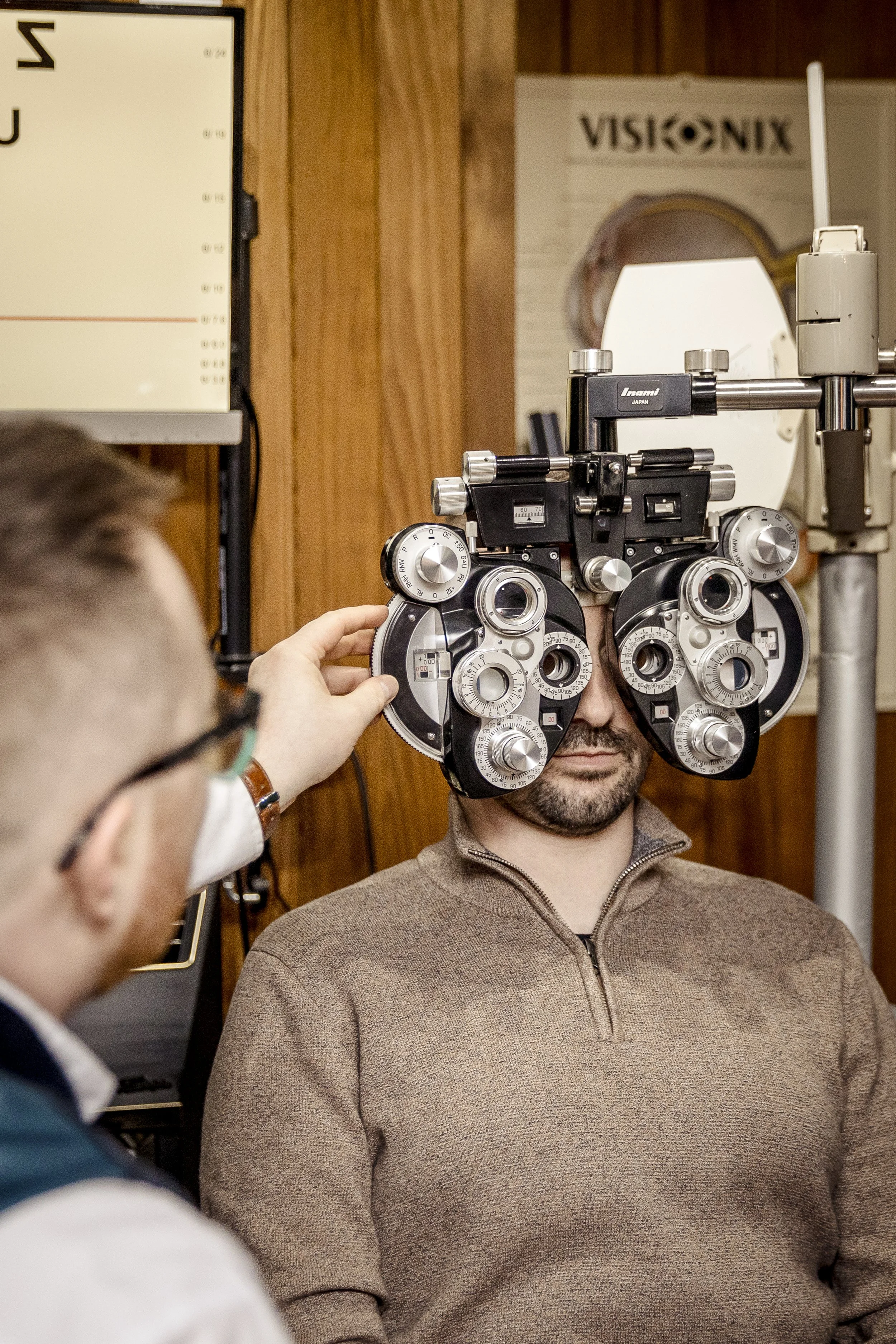
My practice focuses on clinical examinations; ensuring that you and your vision take full priority. When I first opened the practice, it was based on the model of optometry in Europe and North America, where the optometrist will perform an eye examination and the patient takes their prescription to an optician. For this reason my practice does not have a big showroom of spectacles; you walk straight into the consulting room for us to concentrate on your eyes and vision.
This way, people are able to ‘consult’ directly with me regarding their eyesight; hence a consulting neuro-optometrist. After every appointment, I will share my findings and clinical opinion of your next steps. We can go through the options available and work out which is the best for you.
As a child, I was born with a squint and lazy eye (amblyopia). This was corrected with surgery and it has only been through my own work in vision therapy and neuro-optometry that I have discovered the wealth of additional management strategies which can support people who are experiencing this.
My professional background has included working in High Street optometry practices, where I also undertook the research into retinal blood vessels and predictions of cardiovascular disease for my PhD. I have since worked for several years as a Senior Lecturer in Optometry and also as a Specialist Optometrist in a Paediatric Ophthalmology unit within the hospital; working alongside orthoptists and consultants to manage children with vision problems. I am now working as the Foundation Professor at the University of Leicester where I have been responsible for creating and implementing a new Masters of Optometry degree within the School of Healthcare.
I set up my private practice in 2020 and very soon realised that my niche was in problem-solving and working with more unusual visual symptoms. My philosophy is to take as much time as we need to resolve your issues and even a routine eye examination can’t be rushed. I also do all additional tests (retinal photography and scans, peripheral vision testing, etc.) myself so that it forms an important part of your consultation. I also charge a flat fee for consultations, irrespective of what additional tests are required. Those tests are necessary for me to give my fullest clinical opinion and I do not believe you should be charged additionally for this.
Neuro-optometry
I specialise in neuro-optometry, where we consider the entire sense of vision (and it’s integration with other senses such as hearing and balance); not just reading the bottom line on the letter chart.
When we evaluate the sense of vision, we are considering how the brain processes visual information. When this system isn’t working correctly it can result in a wide range of symptoms, as well as often being very difficult to describe. “I can’t really explain, but it just doesn’t feel right” is one of the most common symptoms I work with and is often the key indicator that neuro-optometry is the answer.
Symptoms can include things such as blurred vision, double vision, light sensitivity, headaches, eyestrain, balance problems, issues with peripheral vision, problems with depth perception, etc. It can also include difficulties with certain activities or in particular environments, from discomfort as a passenger in a car to walking around a bright supermarket and feeling overwhelmed.
These can be elicited by a range of causes, including brain injury and concussion, even mild cases. Traumatic brain injury (TBI), stroke, assault, road traffic accidents, blast injuries; all of these and more can result in sufficient brain injury to cause visual symptoms and it is often reported that over 75% of all brain injuries experience visual symptoms to some degree.
Equally, these symptoms can arise without such an incident, and I often work with patients experiencing binocular vision dysfunction (BVD), functional neurological disorder (FND), visual snow syndrome (VSS) and hallucinogen persisting perception disorder (HPPD), to name just a few.
Treatment and management of these is broadly split into two categories;
Optical: including lenses, prisms, tints and filters
Therapeutic: exercise-based therapy
It is crucial to work with the person in their entirety. This means working with colleagues who can provide additional support and expertise. I work very closely with a therapist who specialises in trauma, because just living with unresolved visual issues can have a profound effect on our wellbeing.
If the above sounds like it may be suitable for you or someone you know, please get in touch for a free 15-minute consultation to discuss your case in more detail.
Vision therapy
We are not born with perfect vision; it is a system which takes time to develop and integrate. Historically the window for development, called the ‘critical period’ has been set at approximately 8 years of age. This is when the system is most responsive to change, however it would be wrong to assume that beyond this period things are set in stone.
Vision therapy is a means of using specific, targeted exercises as a way to optimise visual performance. It is not simply ‘seeing better’, but maximising the efficiency of the visual system. What this looks like is entirely dependent upon the individual. For some, this may be improving visual performance in sport or work. For others, this may be strengthening the vision in a weaker (or ‘lazy’) eye to improve binocular function.
Having a squint and amblyopia (‘lazy eye’) myself, I know just how important it is to take things steadily when working with this aspect of vision. Equally, however, I am also aware of how determined people can be to achieve the best vision possible and how important this is to them.
Your Questions,
Answered
How often should I have an eye examination?
Typically you should have an examination once every 12-24 months. If you wear contact lenses, or have a health conditions such as diabetes, you may need to be seen more frequently.
Will I get a copy of my prescription?
Yes, you will always be issued with a copy of your prescription, plus any additional measurements you may need (such as pupil distances). You will be given detailed advice on what lens types and manufacturers would best suit your needs.
No, the practice is private only. I am able to process NHS referrals (e.g. to the hospital) and we will discuss all such options, both NHS and private.
Do you offer NHS appointments?
Please get in touch using the details below, either using the contact form or details provided. The practice is by appointment only so you must schedule a consultation in advance.
How do I book an appointment?
I am a case manager, can you see my client?
Yes, I work regularly with case managers and the multi-disciplinary team to develop a management plan which compliments and supports other on-going therapies. Vision is the sensory ‘glue’ which can hold other information together during rehabilitation. I am happy to discuss your client's needs and work out whether a visit to my practice, or a home/clinic visit is more suitable.
Do you do expert witness reports?
Yes, I have been asked to prepare court-compliant expert witness reports and am happy to discuss this. I am presently working towards my full accreditation with Bond Solon in expert witness report work.
Contact details
If you would like to ask any questions about your vision or my services, or would like to schedule a free 15-minute consultation about neuro-optometry, please complete the contact form here.